Chimney Restoration in Cornwall: Traditional Repairs, Repointing and Rebuilding
Cornwall’s historic buildings are defined by their distinctive stonework, traditional roofs and characterful chimneys. From granite cottages and rural farmhouses to Victorian townhouses and listed properties, chimney restoration in Cornwall is an important part of the duchy’s architectural heritage. However, chimneys are also among the most exposed parts of a building. Years of wind-driven rain, salt-laden air and changing temperatures can weaken mortar joints, damage stonework and cause water to enter the property.
At Legacy Restoration, we specialise in preserving and repairing traditional buildings throughout Cornwall. Our experience with historic masonry, lime mortar and conservation work allows us to approach chimney restoration with care, retaining original character while addressing structural deterioration and weather damage. Whether your property needs localised repointing, stone repairs or more extensive chimney rebuilding, understanding the cause of the problem is the first step towards an appropriate, lasting solution.
Why Chimneys in Cornwall Need Specialist Restoration
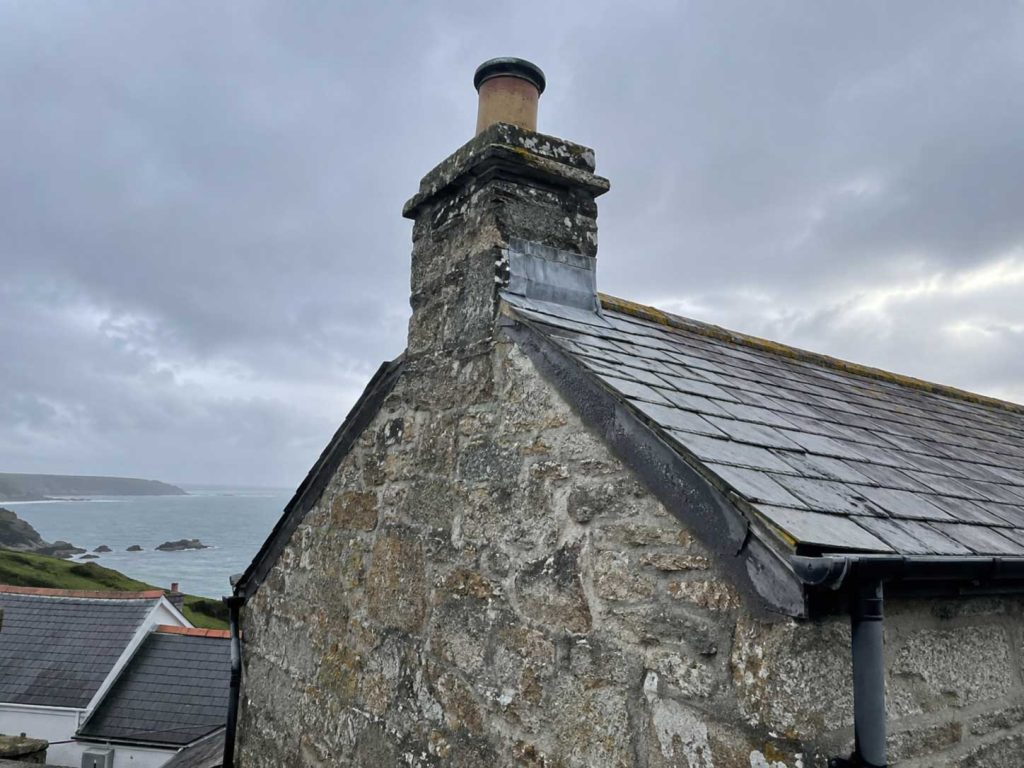
Cornwall’s coastal climate presents particular challenges for historic chimney stacks. Unlike the walls below, chimneys stand above the roofline, exposed to prevailing winds and heavy rainfall. Over time, moisture can penetrate defective mortar joints, weakened masonry and damaged roof flashings. Traditional Cornish chimneys were commonly constructed using locally sourced stone, handmade bricks and lime mortar. These materials were selected and assembled using building methods that differ considerably from modern construction.
Older masonry often relies on lime mortar to accommodate small movements and allow moisture to evaporate. Repairs using unsuitable hard cement mortars can interfere with this process, potentially contributing to trapped moisture and deterioration of softer historic materials. Successful chimney restoration therefore requires more than replacing loose mortar. It involves understanding how the chimney was originally constructed and selecting repair materials that remain compatible with the existing building.

Warning Signs That Your Chimney Needs Repair
Chimney deterioration isn’t always immediately obvious from ground level. In many cases, homeowners first notice internal damp or water staining before identifying the external defect. Common warning signs include:
- Loose, missing or crumbling mortar joints
- Cracked, damaged or displaced stones and bricks
- Leaning or visibly unstable chimney stacks
- Cracked flaunching around chimney pots
- Loose, damaged or missing chimney pots
- Failed lead flashing where the chimney meets the roof
- Water staining around chimney breasts and roof timbers
- Damaged render or unsuitable previous cement repairs
- Fallen masonry or mortar following periods of severe weather
Not every damaged chimney requires rebuilding. Where the underlying masonry remains stable, carefully executed repairs may be sufficient. However, delaying work can allow moisture to penetrate further into the structure, increasing the extent and cost of restoration. If masonry appears unstable or a chimney is visibly leaning, avoid the affected area and arrange a professional assessment.
What Does Professional Chimney Restoration Involve?
Every chimney presents different challenges, depending on its age, construction, condition and exposure. Legacy Restoration’s wider building maintenance services include chimney repairs and rebuilding, roof repairs, traditional stonework and lime pointing. A conservation-led approach begins by assessing the existing materials, identifying areas of deterioration and determining the most appropriate level of intervention.
Chimney Inspection and Assessment
Before restoration begins, the chimney should be inspected using appropriate safe access. An assessment may identify deteriorated mortar joints, loose masonry, movement, damaged flaunching or defective leadwork. The surrounding roof coverings should also be considered, as water penetration may originate from the junction between the chimney and roof rather than the chimney masonry itself. Understanding the cause of deterioration helps avoid unnecessary rebuilding or repairs that fail to resolve the underlying problem. Photographic records can also be useful, particularly when documenting repairs to historic or listed buildings.
Lime Mortar Repointing
Repointing is one of the most common repairs required on traditional chimney stacks. Over time, existing mortar can become weathered, loose or recessed, allowing rainwater to penetrate the masonry. For many older Cornish buildings, lime mortar repointing offers a compatible approach that allows moisture to move through and evaporate from the joints.
The process typically involves carefully removing defective or incompatible mortar, cleaning the joints and applying an appropriately specified lime mortar. The correct mortar composition depends on the existing masonry and exposure conditions. Fresh lime work also requires appropriate protection while curing, particularly during heavy rain, strong winds or cold weather. Legacy Restoration has extensive experience working with traditional lime-based materials. You can learn more about these techniques in our article on traditional restoration using Cornish lime.
Stone and Brick Chimney Repairs
Many traditional Cornish chimneys are constructed from granite, local stone or historic brickwork. Although these materials can be exceptionally durable, deterioration may occur where mortar joints have failed, moisture has become trapped or earlier repairs have introduced unsuitable materials.
Where possible, original masonry should be retained and repaired rather than replaced. Damaged stones or bricks may require individual replacement using materials selected to complement the existing construction in appearance and performance. This approach is particularly important when restoring historic properties where weathered stonework and traditional craftsmanship contribute to the building’s character. Our guide to granite wall repair in Cornwall explains why careful material selection and traditional masonry techniques are essential when working with older buildings.
Chimney Rebuilding and Structural Repairs
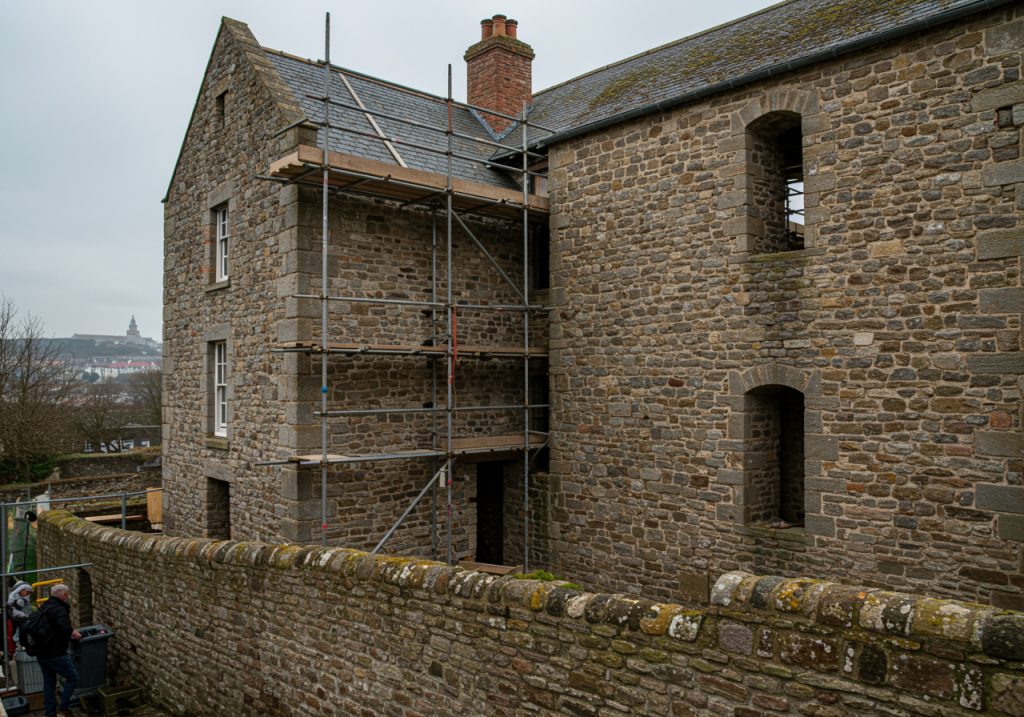
Where a chimney stack has become unstable or seriously deteriorated, partial or complete rebuilding may be necessary. A conservation-sensitive rebuilding project seeks to retain as much original material as possible. Existing stones, bricks and chimney pots may be carefully dismantled, assessed and reused where suitable. Replacement materials should be selected to match the original construction, while the rebuilt stack must meet appropriate structural and weatherproofing requirements.
The aim is not simply to create a new-looking chimney, but to restore its stability and performance while preserving the building’s appearance. For older and listed properties, the original proportions, joint profiles and architectural details can be particularly important.
Lead Flashing, Flaunching and Chimney Pots
Not all chimney leaks originate in the masonry itself. The junction between the roof and chimney is particularly vulnerable to water penetration. Damaged or poorly installed lead flashings can allow rainwater to enter the roof structure and surrounding walls. Chimney restoration may therefore involve assessing and repairing leadwork, alongside the masonry.
Flaunching, the sloping mortar surrounding chimney pots, is another important component. Cracked or defective flaunching can allow water to penetrate the chimney and may affect the stability of the pots. Original chimney pots should be retained wherever practical, particularly where they contribute to the historic appearance of the property. Unused flues also require consideration. Inappropriate sealing can cause ventilation and condensation problems, so the correct treatment should be established before work proceeds.
Where a chimney serves a working fireplace or appliance, flue safety and suitability for use should be checked separately by an appropriately qualified professional.
Chimney Leaks and Damp Problems
Water entering through a damaged chimney can cause problems beyond the visible masonry. Defective pointing, failed lead flashing or damaged chimney pots may allow moisture to travel into roof timbers, adjoining walls and internal chimney breasts. Symptoms can include damp patches, discoloured plaster, staining and deterioration of internal finishes. However, moisture around a chimney does not always indicate an external leak. Condensation inside unused flues and historic soot deposits can create similar symptoms.
Applying waterproof coatings or redecorating affected surfaces without identifying the source is unlikely to provide a lasting solution. A careful assessment should consider the chimney, surrounding roof details and internal ventilation before repairs are specified. For further guidance, read our article on signs of damp in older Cornish properties.
Restoring Chimneys on Listed and Historic Buildings
Cornwall has a rich collection of listed buildings, traditional cottages, historic farmhouses and architecturally significant properties. Chimney stacks can form an important part of these buildings’ character. Their proportions, materials, decorative details and original construction may all contribute to their historic significance. Restoration work must therefore be approached carefully.
Routine maintenance and appropriate like-for-like repairs may not require listed building consent. However, substantial rebuilding, removal or changes affecting a building’s special character may require approval. Property owners should seek advice from the relevant conservation officer before undertaking significant work. Legacy Restoration has worked on Grade I and Grade II listed buildings in Cornwall since 2000. Our historic building conservation services focus on traditional craftsmanship, compatible materials and preserving original architectural features. The guiding principle is to retain sound historic material wherever possible, rather than replacing it unnecessarily.
Why Choose Legacy Restoration for Chimney Repairs in Cornwall?
Restoring a traditional chimney requires more than general building experience. It calls for an understanding of historic materials, masonry construction, moisture movement and the relationship between the chimney and surrounding roof. Legacy Restoration South West Limited is a Cornwall-based heritage restoration company with experience working on historic and listed properties since 2000. Our services include traditional lime pointing, natural stonework repairs, roof repairs, chimney repairs and rebuilding.
As members of The Guild of Master Craftsmen, we are committed to high standards of workmanship and the specialist skills needed to preserve traditional buildings. Our approach is based on assessing the property carefully, retaining original materials wherever appropriate and recommending repairs that respect the building’s character. We undertake restoration and maintenance projects across Cornwall, including Truro, Falmouth, Redruth, Camborne, St Ives, Penzance, Bodmin and surrounding areas.
When Is the Best Time to Repair a Chimney?
Chimney restoration can be undertaken throughout much of the year, although weather conditions play an important role. Spring, summer and early autumn often provide more favourable conditions for traditional lime mortar work. Fresh mortar requires protection from frost, driving rain and rapid drying, so scheduling and temporary weather protection may influence the restoration process.
However, urgent structural defects should not be delayed simply because the weather is unsuitable for permanent repairs. Loose chimney pots, unstable masonry or a leaning stack may require immediate professional attention and temporary safety measures. Regular inspections following severe storms can also help identify problems before they develop into more extensive repairs.
Protecting Cornwall’s Traditional Chimneys
A well-maintained chimney helps protect more than the roofline. It supports the weather resistance, structural condition and historic character of the wider building. Whether your property requires lime mortar repointing, traditional stonework repairs or more extensive chimney restoration, choosing appropriate materials and skilled workmanship is essential.
Concerned about the condition of your chimney? Legacy Restoration provides specialist restoration and maintenance services for traditional and historic properties throughout Cornwall.