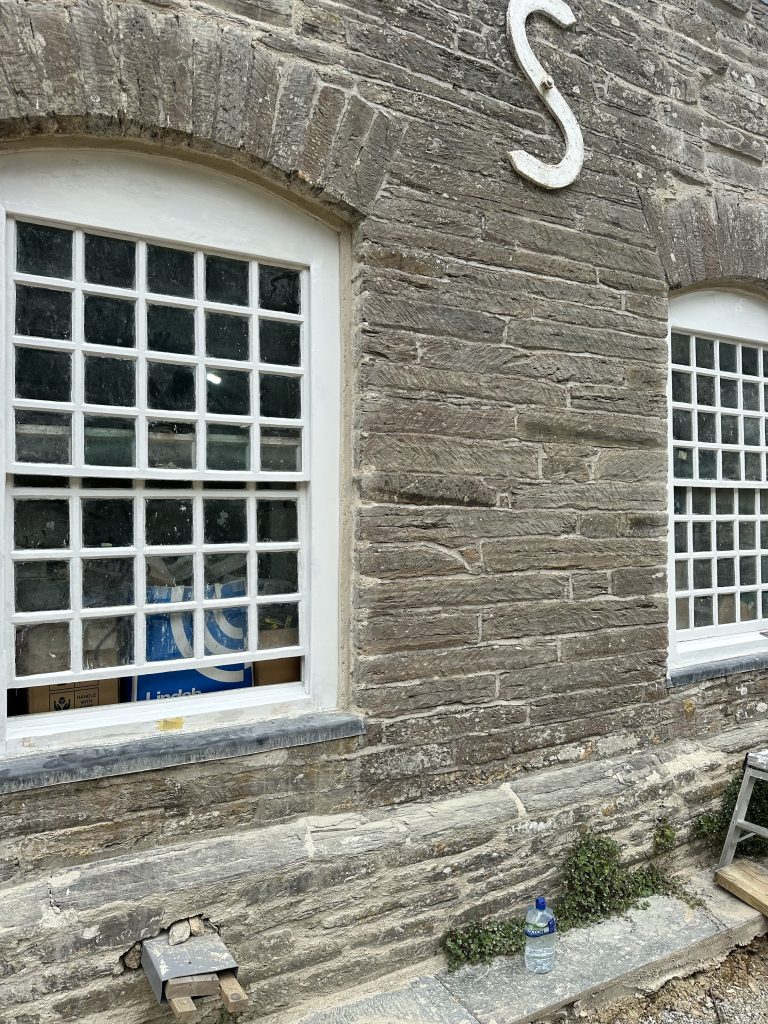
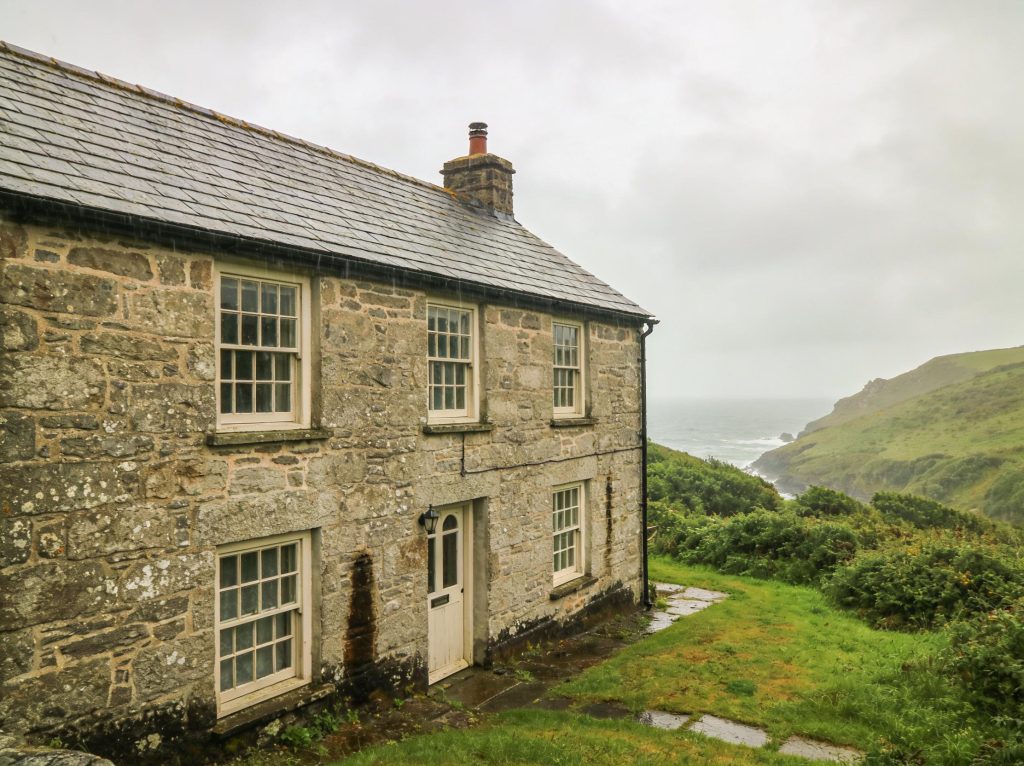
Granite Wall Repair Cornwall for Traditional and Historic Buildings
Across Cornwall, granite buildings stand as lasting reminders of Cornwall’s architectural and industrial heritage. From sturdy miners’ cottages and rural farmhouses to chapels, barns and coastal properties, these structures were built using local stone and skills passed down through generations.
Granite may be exceptionally durable, but a building’s walls depend on much more than the stone’s strength. Mortar joints, internal wall cores, window openings, roof junctions and rainwater systems all influence how well the masonry performs. When one part begins to fail, moisture and movement can gradually affect the wider building.
Legacy Restoration provides specialist granite wall repair in Cornwall for traditional, historic and period buildings. By combining careful investigation with lime mortar, traditional masonry skills and heritage-sensitive repair methods, it is possible to stabilise damaged walls while preserving the character that makes each property distinctive.
Understanding Granite Building Construction in Cornwall
Many traditional Cornish buildings were constructed with thick, solid granite walls. These usually consist of two stone faces with a core of smaller stones, lime mortar and other locally available material. Larger stones may extend further into the wall to tie its faces together, while carefully selected pieces define corners, doorways and window openings.
Although commonly described as solid walls, these structures are rarely uniform throughout. Their strength comes from the way individual stones interlock and distribute loads, supported by the flexibility of lime mortar. The walls were designed to absorb a certain amount of moisture and release it naturally when conditions improved.
This differs significantly from modern cavity wall construction. Older granite walls do not normally have a clear cavity or a damp-proofing system like those found in newer properties. Applying modern assumptions to a traditional building can therefore create problems, particularly if impermeable cement, waterproof coatings or non-breathable finishes are used.
Before any repair begins, you must understand the wall’s original construction. A successful solution should work with the building’s fabric rather than attempting to make it behave like a modern property.
Common Types of Granite Buildings
Cornwall’s granite buildings vary by location, period, and original purpose. Rural farmhouses and barns often feature substantial rubble walls with large corner quoins. Miners’ cottages may use smaller, roughly coursed stone, while civic, ecclesiastical and commercial buildings can include finely dressed granite around openings and prominent elevations.
Properties in coastal areas may have been built to withstand severe wind-driven rain, while inland buildings may face persistent moisture from sheltered locations and high ground levels. Every structure must be assessed individually, even when it appears similar to neighbouring buildings.
Signs That a Granite Building Needs Masonry Repair
Problems in granite walls often develop gradually. Recessed mortar joints, isolated damp patches or a minor crack near a window may not initially seem serious. However, these signs can allow water to penetrate deeper into the wall, weakening the core and affecting internal finishes.

A building should be considered as a complete structure. Cracking may be connected to roof movement, failed lintels, drainage problems or alterations made during previous renovations. Dampness may result from defective pointing, but it could also come from leaking gutters, raised ground levels, or impermeable coatings.
Signs that a granite building may need professional attention include:
- Loose, cracked or displaced stones
- Open, deeply recessed or crumbling mortar joints
- Cracks above windows and doors
- Movement around corners or wall junctions
- Bulging or uneven external wall faces
- Damp patches on internal walls
- Failed cement pointing separating from the granite
- Water penetration during wind-driven rain
- Vegetation growing from masonry joints
- Deterioration around chimneys, parapets and roof abutments
Historic buildings naturally have irregular surfaces, weathered stone and joints of varying widths. These characteristics do not necessarily indicate failure. The key is to identify active deterioration, structural movement or moisture pathways rather than replacing sound historic fabric unnecessarily.
Cracks Around Windows and Doors
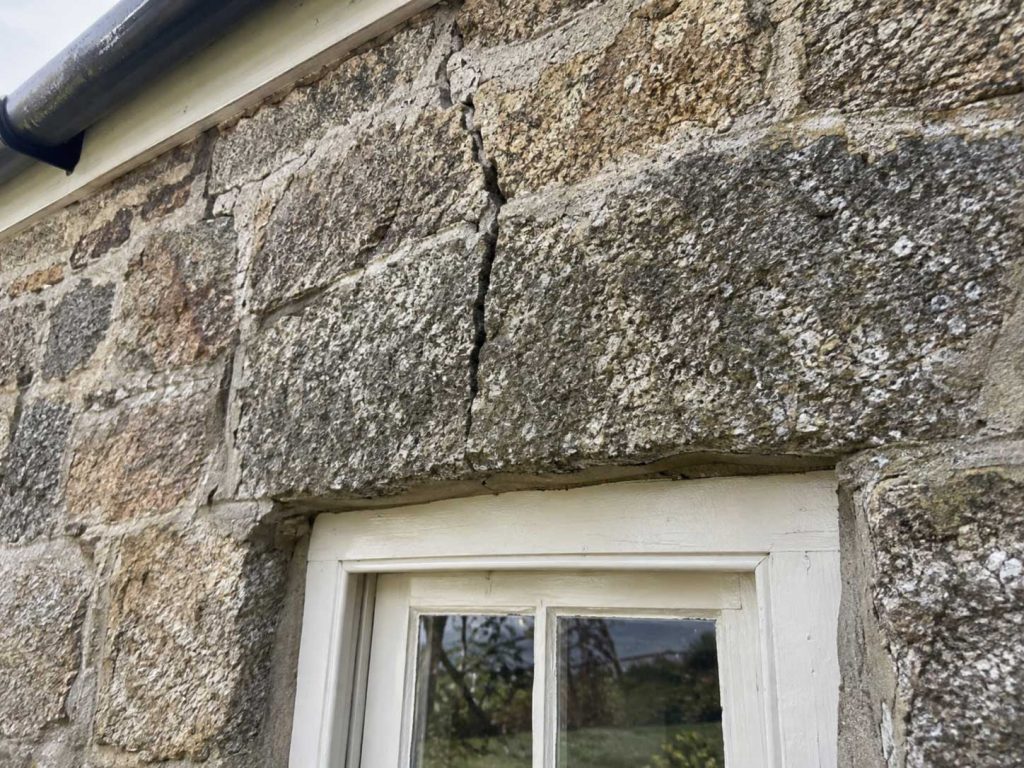
Openings are common areas of weakness because the wall’s weight must be carried across lintels or arches. Cracks above a window or door may indicate a failed timber, stone or metal lintel, movement in the surrounding masonry or an inappropriate alteration to the opening.
Simply filling a crack will not resolve the problem if the supporting structure has failed. The cause should be established before repairs are specified. Work may involve stabilising the opening, repairing or replacing the lintel and rebuilding disturbed granite using compatible materials.
Bulging and Loose Wall Faces
Bulging can occur when the outer face of a wall begins to separate from its internal core. Water ingress, washed-out mortar, insufficient bonding stones or earlier disturbance may all contribute. In some cases, inappropriate cement pointing conceals deterioration until the wall face becomes visibly unstable.
Localised rebuilding may be necessary where stones can no longer be secured through repointing alone. The affected area should be dismantled carefully, with the original stones recorded and retained for reuse wherever possible.
Why Lime Mortar Is Important for Granite Buildings
Traditional granite buildings were generally constructed using lime-based mortar. Lime is more flexible and vapour permeable than dense modern cement, allowing small amounts of movement without placing excessive stress on the stonework.
Its breathability is especially important in Cornwall’s damp, exposed climate. Moisture entering a solid wall needs a route through which it can evaporate. Lime mortar encourages drying through the joints, helping to protect the granite and reduce moisture retention within the building fabric.
Cement-rich pointing can interfere with this process. Because cement is usually harder and less permeable than the original mortar, it may force moisture to remain inside the wall or escape through softer stone and internal plaster. It can also crack away from irregular granite, creating narrow gaps through which rainwater enters but cannot readily evaporate.
Removing inappropriate cement and replacing it with a compatible lime mortar can improve the wall’s ability to manage moisture. However, this work must be carried out carefully because aggressive removal techniques can damage the edges and faces of the original granite.
Choosing the Right Lime Mortar
Not every lime mortar is suitable for every building. The appropriate specification depends on the wall’s exposure, condition, location and original construction. A sheltered farmhouse elevation has different performance requirements from a sea-facing gable exposed to strong winds and salt-laden rain.
The aggregate is also important. Its grading, texture and colour influence both performance and appearance. A well-matched mortar should sit naturally beside the existing granite without creating joints that look excessively smooth, bright or uniform.
Joint finishing requires the same degree of care. Traditional granite masonry often has irregular joint widths, so the pointing should follow the stone rather than impose a modern, artificial pattern. Correct preparation, compaction and curing are essential if the repair is to remain durable.
The Process of Repairing a Granite Building
Effective granite wall repair in Cornwall begins with a detailed assessment. Repointing should not be recommended automatically, particularly when cracking, dampness or movement may have another cause.
The inspection should consider the elevations as well as roof junctions, chimneys, gutters, downpipes, window openings and external ground levels. Internal signs, such as damp plaster or cracking, can provide useful evidence about how the wall is performing.
Once the source and extent of deterioration have been identified, a repair plan can be developed. A typical project may include:
- Inspecting the granite, mortar joints and internal signs of deterioration
- Identifying water ingress, structural movement and failed previous repairs
- Carefully removing loose mortar or unsuitable cement pointing
- Securing or rebuilding unstable masonry
- Repairing defects around windows, doors, corners and roof junctions
- Repointing with an appropriate lime mortar
- Protecting the new work from heavy rain, frost and rapid drying
- Monitoring the building as the masonry begins to dry
The precise approach will vary. In some cases, localised repointing may be sufficient. In others, sections of wall may need to be dismantled and rebuilt. The objective is to carry out only as much intervention as necessary while achieving a sound and lasting repair.
Repointing Granite Elevations
Repointing is appropriate when the stones remain stable, but the exposed mortar has eroded or become defective. Failed material must be removed to a suitable depth without damaging the granite. The joints are then cleaned and lightly dampened before fresh lime mortar is placed and compacted.

Thin surface applications should be avoided. Smearing mortar over the face of the wall may conceal open joints temporarily, but it rarely provides a durable repair and can significantly alter the building’s appearance.
Newly pointed masonry must be protected while the lime cures. Strong sunlight and wind can dry the mortar too quickly, while heavy rain can wash out fresh joints. Frost protection may also be necessary during colder conditions.
Localised Rebuilding
Where a wall face is loose, bulging or partially collapsed, repointing alone will not restore its integrity. The unstable section may need to be dismantled to sound masonry and rebuilt with proper bonding into the surrounding wall.
Original stones should be retained and returned to suitable positions. Their weathered faces, shapes and colour variations contribute to the building’s appearance. Replacement granite should only be introduced where necessary and should match the existing masonry as closely as practical.
During rebuilding, the internal core must also receive attention. Filling only the visible face can leave hidden voids and instability. Smaller stones and compatible mortar should be used to consolidate the wall while preserving its traditional construction.
Repairing Vulnerable Areas of Granite Buildings
Some areas of a building experience more exposure or structural stress than others. Chimneys, gables, corners and openings are particularly vulnerable because they receive concentrated weather or carry significant loads.
Granite repair should therefore include details that may initially appear separate from the main elevation. A leaking chimney flashing or broken gutter can repeatedly saturate newly repaired masonry, undermining otherwise careful work.
Chimneys and Gable Walls
Chimneys are highly exposed to rain, wind and temperature changes. Open joints, damaged flaunching and defective flashing can allow water to enter both the chimney and the wall below. Repointing may be necessary, but surrounding roof details should also be inspected.
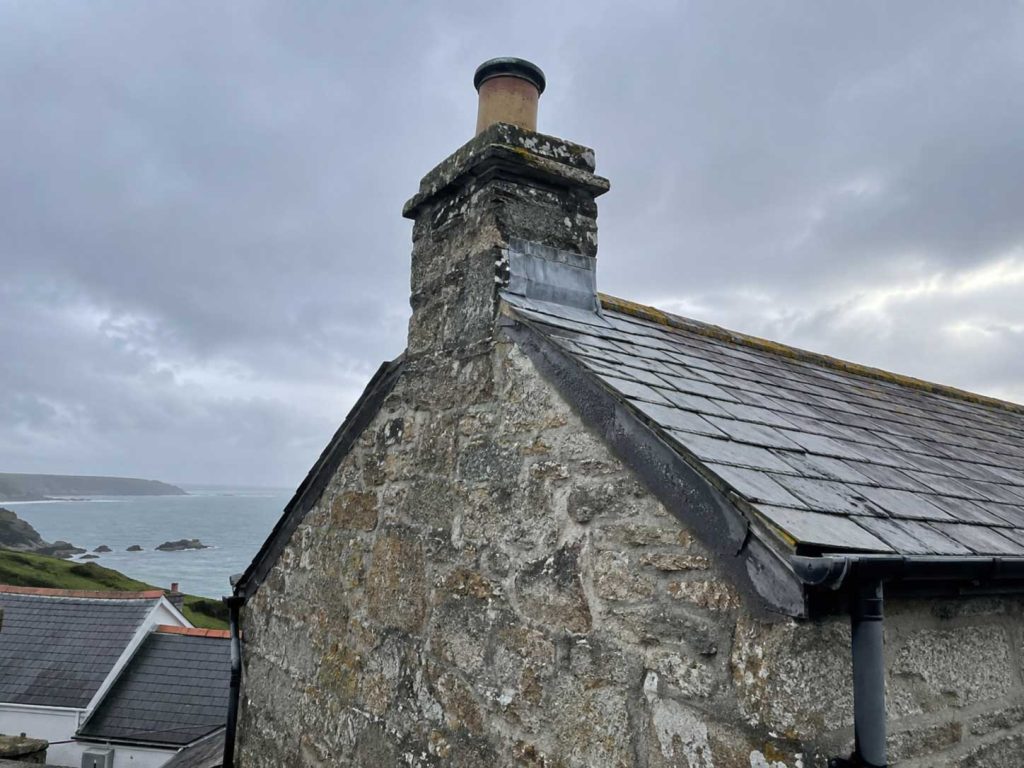
Gable walls are similarly exposed, especially on coastal or elevated sites. Wind-driven rain can penetrate poorly finished joints, while movement at roof level may lead to cracking. Repairs need to provide weather resistance without sealing moisture inside the masonry.
Corners and Wall Junctions
The corners of traditional buildings often contain large granite quoins that help tie adjoining walls together. Movement at a corner may indicate a loss of bonding, roof spread, foundation movement or alterations to the internal structure.
Junctions between original buildings and later extensions also require close examination. Different materials and construction periods may respond differently to moisture and movement, producing recurring cracks if the underlying relationship is not understood.
Window Sills, Reveals and Lintels
Window openings are frequently altered during the lifetime of a property. Replacement frames, inserted services and changes to internal finishes can disturb surrounding masonry or affect how water drains away.
Granite sills should shed water beyond the wall face, while joints around frames must be appropriately detailed. Cracks in reveals or above lintels should be investigated rather than hidden beneath sealant or decorative finishes.
Damp in Granite Buildings
Damp is one of the most common concerns in traditional Cornish properties, but it rarely has a single cause. Solid granite walls absorb and release moisture differently from modern cavity walls, and some seasonal variation is normal.
Persistent dampness may be associated with failed pointing, leaking rainwater goods, high external ground levels or cement render. Non-breathable internal plaster and modern paints can also restrict evaporation, causing moisture to become visible on internal surfaces.
Granite wall repairs should form part of a broader moisture assessment. Repointing alone may not solve the problem if gutters continue to overflow or the exterior ground bridges the base of the wall. Equally, chemical damp-proofing may be inappropriate if the real issue is trapped moisture or defective maintenance.
A balanced repair strategy may involve improving drainage, repairing rainwater systems, replacing incompatible mortar and using breathable internal finishes. Allowing a saturated solid wall to dry can take time, so immediate cosmetic changes should not be used as the only measure of success.
Preserving the Character of Historic Granite Buildings
The aim of conservation repair is not to make an old building look new. Weathered granite, slight variations in coursing and evidence of past craftsmanship are part of the property’s significance. Over-restoration can remove this character and leave an elevation looking flat or unnaturally uniform.
Minimum intervention is often the most appropriate approach. Sound mortar and stable stone should be left in place, while defective areas receive focused attention. This protects original fabric and prevents unnecessary disturbance.
Where new granite is required, it should complement the existing stone in grain, colour, size and surface texture. Machine-cut blocks may appear out of place within an elevation built from irregular local rubble. Skilled selection and placement help repairs blend naturally without creating a false impression of age.
Listed Buildings and Conservation Areas
Consent may be needed if a granite property is listed or situated within a conservation area. Even work described as repair can affect a building’s special architectural or historic interest if it involves extensive repointing, rebuilding or a change in materials.
Owners should consult the relevant local planning authority or conservation officer before beginning significant work. A clear specification covering mortar, joint finish, stone replacement and working methods can help demonstrate that the proposed repairs are sympathetic.
Choosing a Granite Building Repair Specialist
Repairing traditional granite walls requires more than general building experience. The contractor should understand solid-wall construction, lime mortar, moisture movement and the visual qualities of historic Cornish masonry.
Before appointing a specialist, ask how the cause of deterioration will be identified and whether existing stone and sound mortar will be retained. The proposed mortar should respond to the building’s age and exposure rather than being chosen as a standard mix for every project.
It is also important to consider how the work will be protected during curing and how adjacent windows, roofs and historic surfaces will be treated. Thoughtful preparation and aftercare are fundamental parts of traditional masonry repair.
Legacy Restoration applies heritage-sensitive methods to granite cottages, farmhouses and other traditional properties across Cornwall and the wider South West. The focus is on resolving the cause of failure while maintaining the building’s structural integrity, breathability and local character.
Conclusion
Cornwall’s granite buildings were constructed to last, but they still depend on well-maintained mortar, effective rainwater management and stable masonry. Open joints, cracked lintels, bulging wall faces and inappropriate cement repairs should be assessed before they develop into more disruptive problems.
Professional granite wall repair in Cornwall should respect the way a traditional building was designed to perform. Lime mortar, careful stone selection and skilled localised rebuilding can restore stability while allowing solid walls to manage moisture naturally.
Is your granite cottage, farmhouse, or historic property showing signs of cracking, water ingress, or mortar failure? Contact Legacy Restoration for expert guidance. We specialise in traditional stone masonry and building restoration across Cornwall and the South West, and we’re here to help you preserve the character and integrity of your property for generations to come.